All Categories
Featured

Maximizing Small Company Group Benefit Value in 2026
Table of Contents
A lot of companies pay $3$5 per staff member per month for a digital worker health program in 2026. Full-service programs with coaching and health assessments begin near $58, so the full market range runs $3$100 per employee per month depending on depth.
Just how much do business health cares cost typically? The response depends upon 3 aspects: your business size, the scope of services you require, and whether you choose a digital-first platform or a full-service company. Here is what a lot of companies can anticipate to budget plan: Basic Digital$3 $5per employee/ month$36 $60 annuallyHealth assessments, health portal, difficulties, academic contentMid-Range$12 $58per staff member/ month$150 $700 annuallyAll basic functions plus incentive programs, group coaching, analyticsComprehensive$58 $100+per worker/ month$700 $1,200+ annuallyFull suite: 1:1 coaching, biometrics, psychological health, reporting, customized material Prices models differ by vendor.
Others use a per-active-user model where you just pay for staff members who really engage. A couple of use tiered rates based on company size, where larger organizations get lower per-employee rates.
Live, 1:1 health coaching is the most pricey element, generally adding $20-$50/employee/month On-site or lab-based screenings add $50-$150 per staff member per occasion Present cards, premium reductions, or HSA contributions can include $100-$500/employee/year Branded courses, difficulties, and communications add development costs Linking to your HRIS, benefits platforms, or claims data requires technical workFree Resource Lots of proven, no-budget health methods your group can release today.
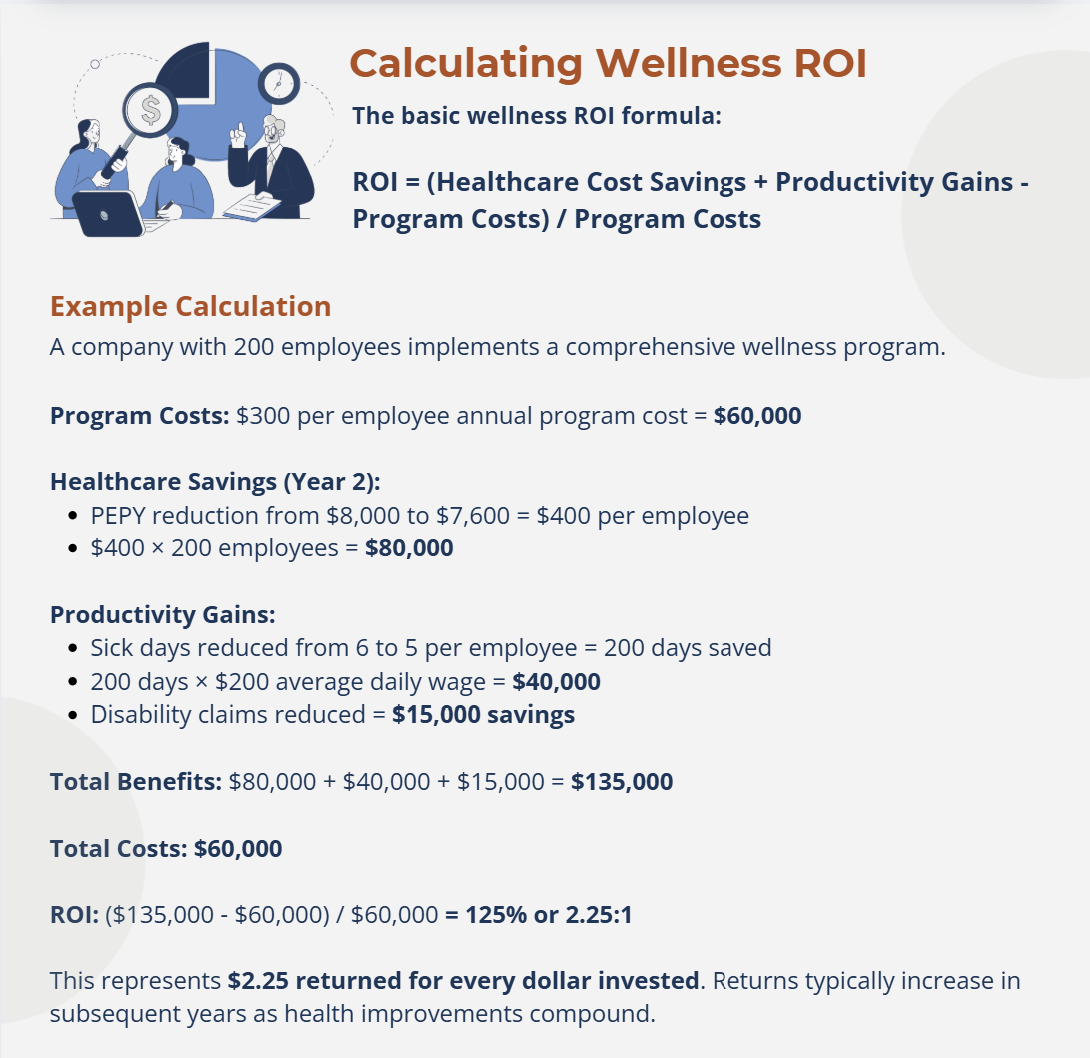
Business Insurance Los AngelesAre employee health care worth the investment? The research says yes, however with a crucial caution: program style matters more than program costs.$3.27 medical cost savings per $1 spentSource: Harvard Meta-Analysis$2.73 absence cost savings per $1 spentSource: Harvard Meta-Analysis6:1 total return on investmentCombined medical + absence A Harvard meta-analysis estimated that for each $1 invested on health care, medical costs fall by around $3.27 and absenteeism costs by about $2.73.
Business Insurance Los AngelesHow to Select Employee Vision and Vision Insurance
company discovered more modest outcomes, highlighting that program quality and style are the real chauffeurs of efficiency. ROI does not take place since a company tosses cash at a program. It is a by-product of a nimble health offering that evolves over time, keeps staff members engaged, and is actively supported by management.
The sticker label rate is only part of the employee wellness program cost. These are the concealed expenses that silently erode your budget and ROI: If just 10-15% of workers engage, your per-participant cost increases. A $5/employee program with 10% participation successfully costs $50 per active user. Personalization and evidence-based engagement methods are the fix.
Generic programs stop working because they do not satisfy workers where they are. The most reliable programs utilize behavioral science to personalize the experience.
The cheapest program is hardly ever the most economical. The most cost-efficient health solutions share these traits.
The Complete Overview of 2026 Employee Assistance EAP
Look for platforms that utilize behavioral science to tailor material to each worker's phase of modification. Mobile app, e-mail, text, and wearable combination to satisfy employees anywhere they are. Makes it possible for timely modifications and clear exposure into participation, results, and program ROI. Programs grounded in cognitive behavioral training, not simply gamification, produce lasting results.
Reduces manual work by connecting to your HRIS, benefits admin, and claims data. Grows with your company so you are not paying too much at 50 employees or underpowered at 500. Picking the ideal wellness partner is not almost the least expensive staff member health care expense. It has to do with abilities, scalability, and proven results.
Do they have published research study or third-party recognition of health outcomes? Can they offer you a clear per-employee cost without any covert fees for implementation, reporting, or material? The number of programs, courses, and difficulties are consisted of? Are they evidence-based? Is the platform mobile-first? Does it incorporate with wearables and your existing HR systems? Do you get a devoted account manager or are you routed to a help desk? Utilize our side-by-side vendor comparison tool to evaluate providers across these criteria.

Latest Posts
Expense Reduction Strategies for 2026 Benefits

Effective Workplace Health Programs for 2026

Choosing the Best Dental Options